Saturday, August 1, 2009

O. Henry introduces the Cisco Kid

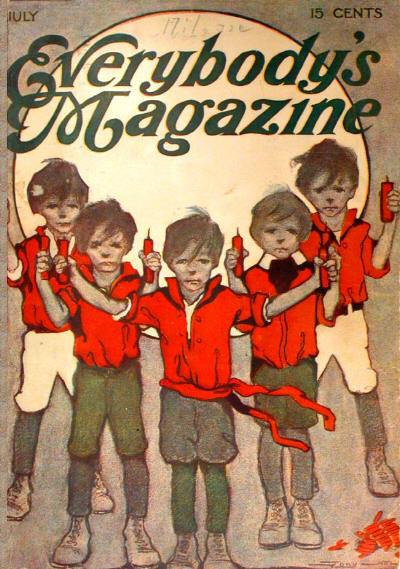
"The Caballero’s Way,” by O. Henry (William Sydney Porter), 1904. [The Mammoth Book of The Western says 1904, but the FictionMags index lists this story as first appearing in Everybody’s Magazine {v17 # 1} July 1907. Expert info requested and welcomed.]

Xenophobia, in our politically correct culture, has been charged against anyone protesting against providing the rights of U.S. citizens to those who cross its borders illegally. I mention this not to stir up political debates, but to note that crossings at the border between Mexico and the United States have been a contentious issue back to the time of the Lone Star Republic and before. How many western movies and stories have dealt with villains escaping U.S. authorities by crossing the Rio Grande? How many have told tales of renegades from south of the border coming north to rustle cattle or steal lives? The Border has always been a volatile demarcation in politics, real life, legend, and storytelling.

“The Caballero’s Way” takes place in Texas, north of the Rio Grande near the Frio River -- but O. Henry invests this story with all the mythic freight of Border Story, along with the effervescent delight in language that marks so many of William Sydney Porter’s tales.

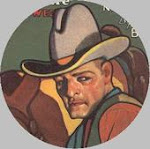
This story, which introduces Cisco Kid, presents a figure quite different from the character we know from Hollywood -- the latter a clean cut, chivalrous and charming rogue. O. Henry’s Cisco Kid is a cold-blooded killer, a non-Hispanic sociopath who rides a horse, and the story’s climax hammers this point home even more strongly than the several thousand words leading up to the end.

And those words! Porter must have found a delight in language that only can compare to a youngster’s delight at being told he can eat his fill in an ice cream shop with no regrets. Here, for a sample taste, take a look at the first paragraph:

The Cisco Kid had killed six men in more or less fair scrimmages, had murdered twice as many (mostly Mexicans), and had winged a larger number whom he modestly forbore to count. Therefore a woman loved him.. . . .

. . . and and third . . .

Tonia Perez, the girl who loved the Cisco Kid, was half Carmen, half Madonna, and the rest—oh, yes, a woman who is half Carmen and half Madonna can always be something more—the rest, let us say, was humming-bird. She lived in a grass-roofed jacal near a little Mexican settlement at the Lone Wolf Crossing of the Frio. With her lived a father or grandfather, a lineal Aztec, somewhat less than a thousand years old, who herded a hundred goats and lived in a continuous drunken dream from drinking mescal. Back of the jacal a tremendous forest of bristling pear, twenty feet high at its worst, crowded almost to its door. It was along the bewildering maze of this spinous thicket that the speckled roan would bring the Kid to see his girl. And once, clinging like a lizard to the ridge-pole, high up under the peaked grass roof, he had heard Tonia, with her Madonna face and Carmen beauty and humming-bird soul, parley with the sheriff's posse, denying knowledge of her man in her soft mélange of Spanish and English.

Oh heck, here’s the sixth paragraph too, it’s so short:

Six feet two, blond as a Viking, quiet as a deacon, dangerous as a machine gun, Sandridge moved among the Jacales, patiently seeking news of the Cisco Kid.

The words roll along with that edge of humorous exaggeration that acts as verbal legerdemain to distract you from the dangerous knife edge of the Cisco Kid’s homicidal tendencies and Ranger Sandridge’s deadly sober responsibility as enforcer of the law. The mixed humorous/deadly quality of the narrative is a mark of the traditional western. For example, only recently I read a more contemporary western short story, “The Bandit,” by Loren D. Estleman, that demonstrates this same narrative balancing act. Published in 1986, the author describes a man released from prison in 1906 after being captive 29 years:

Jubal smiled. His teeth were only a year old and he was just a few months past grinning like an ape all the time.

The synchronal picture of a smiling primate and a death’s head rictus is sharp when considered as a foreshadowing of the tale’s end. Like Porter, Estleman is a master storyteller. In “The Caballero’s Way,” Porter disguises the deadly seriousness at the core of this story just as the Cisco Kid masks the ice of his heart with his charm and smile.

The story itself, stripped of its colorful word play and its climactic, obligatory O. Henry twist, offers little that a fan of western fiction or song hasn’t encountered hundreds (if not thousands) of times. But the story’s marvelousness is all in its telling -- here, as in nearly every mature tale by Porter, the storyteller is the star. But isn’t that true of most of the genre stories we fondly recall? Some other writer could tell the same story, but the end result would be far different, because the magic of “The Caballero’s Way” resides in how Porter tells the tale.

If someone already has written an article describing how O. Henry’s blue-eyed murderer was transformed by Hollywood, radio, and comics into a Western Robin Hood, I’d like to know about it to find out more.

Wednesday, May 27, 2009

Maynard Dixon and Ben Blair


Ben Blair: A Plainsman is a novel by Will Lillibridge published by A.C. McClurg & Co. in Chicago in 1905. It was published in the wake of the growing popularity of the western that followed Owen Wister's The Virginian (1902). (Just think -- that influential novel is more than 100 years old now.)

Like many westerns from the period, there is a heavy romantic element. From the opening of Chapter One, "In Rude Border-Land," the reader might think that all that lies ahead in the novel's 333 pages is rough-and-tough action:

EVEN in a community where unsavory reputations were the rule, Mick Kennedy's saloon was of evil repute. In a land new and wild, his establishment was the wildest, partook most of the unsubdued, unevolved character of its surroundings. There, as irresistibly as gravitation calls the falling apple, came from afar and near—mainly from afar — the malcontent, the restless, the reckless, seeking — instinctively gregarious — the crowd, the excitement of the green-covered table, the temporary oblivion following the gulping of fiery red liquor.

However, a glimpse at the last chapter's title in the Table of Contents gives away the book's secret: "Love's Surrender." On the book's last page, the hero says, "Florence! Florence! Florence!" and the heroine, Florence (good guess), gasps, "Ben! Ben! Ben!"

Oh dear.

Enough of that. We're here because this book offers the reader a single piece of art (not counting the cover), a frontispiece by Maynard Dixon, shown above. The bright contrasting colors, the statue-like solidity of the human figures against the spread of landscape that rolls away into the distance -- these are all the elements that will mark Dixon's more accomplished work in the coming years. Ben wears his gear like a man who knows his business -- although Dixon may have prettied him up a bit for the book's female readers. That hat just doesn't look bashed-in enough to be quite believable to me.

The book's cover includes a relatively simple figure -- a man's face with sombrero and bandana, mostly in shadow. The hat looks pretty authentic here. The decoration is simple, done in the sort of heavy lines that are typical of this sort of embossed book cover from the period, but there's clearly a knowing hand at work. The circular squiggle below the figure -- the artist's signature -- looks very similar to the sort of swirling D that Dixon used in signing some of his work, and I feel pretty sure this front cover design was executed by Dixon.

If you want to immerse yourself in the tear-stained melodrama of Florence and Ben Blair -- or if you want to check out the cover and frontispiece by Maynard Dixon for this novel -- you can find it over at Google Books. Just click here.

Saturday, May 16, 2009

Manly Wade Wellman's Sergeant Jaeger Stories

Sergeant Jaeger stories in Fearful Rock and Other Precarious Locales: Selected Stories of Manly Wade Wellman Volume 3 (San Francisco: Night Shade Books, 2001.)

I've included this review here, and those folks who are familiar with Wellman's weird fiction might think that an odd choice. However, for these stories, the western category works.

Contrary to how the Black Mask style as practiced by Dashiell Hammett and his hard-boiled confreres seemed to influence so pervasively popular fiction writing in the United States — Hammett's staccato, fast-moving style became common in the hero pulps, among some western and science fiction writers, and nearly the de facto style of Gold Medal authors and others during the paperback original novel boom — the horror tale and weird tale typically kept a more lush style because of the Weird Tales genre's reliance on atmosphere and building up of sensation. Robert E. Howard's sword and sorcery tales were something of a hybrid; but by the time Karl Edward Wagner was writing his Kane stories he had a style that was recognizably influenced by the hard-boiled and mainstream fiction styles.

In reading what editor John Pelan calls the Sergeant Jaeger stories — "Fearful Rock" (Weird Tales issues for February, March, and April 1939); "Coven" (Weird Tales July 1942); and "Toad's Foot" (The Magazine of Fantasy & Science Fiction April 1979) — Manly Wade Wellman clearly did not follow the laconic Black Mask style. If anything, Wellman's southern-influenced storytelling here almost seems leisurely, if I can go so far, and the horrific details he relates are all the more frightening because of the controlled manner he uses to relate these tales.

Joel Lane, a horror writer and a member of the Yahoo email group All_Hallows, which focuses on ghost stories and supernatural fiction (and is an e-mail offshoot of All Hallows, the journal of the Ghost Story Society), captured Wellman's style nicely with the word "quiet." He did so in this passage, part of a July 19, 2006 posting to the group:


" . . . the real centre of gravity of pulp supernatural horror belongs to the American writers of the 40s and 50s: Ray Bradbury, Richard Matheson, Theodore Sturgeon, mid-period Bloch, Manly Wade Wellman, Joseph Payne Brennan, August Derleth and others. This was a quieter, more down-to-earth weird fiction than that of the earlier pulp writers. It was often regional, and had strong links to the crime genre as well as to the traditional ghost story."


Quiet and down-to-earth, oral-rooted storytelling is Wellman's mode of telling these tales. This mode fits, since these are historical fictions rather than contemporary narratives. All three have their beginnings during the U.S. Civil War, during which Jaeger served as a sergeant in a Union Army troop. The umbrella title of "Sergeant Jaeger stories" comes from Jaeger's participation in each tale.

"Fearful Rock" relates the weird happenings in the community of that name in "a great, trough-like valley just south of the Missouri-Arkansas border" when a Union troop skirmishes with Quantrille's guerilla raiders. The incident involves an abandoned house; two odd men — a father, Persil Mandifer, and his son, Larue — who would seem to fit better in the Garden District of New Orleans than on the western frontier; and Enid Mandifer, ostensibly raised as Persil's daughter, but who learns at the story's opening she was adopted for the purpose of marriage (read sacrifice) to some unnamed elder god or demon (which weakly links the tale to the Cthulu Mythos, one might argue) so that Persil and Larue's power and seeming agelessness may continue uninterrupted.

Coincidentally enough, the night of the skirmish turns out to be the night of Enid's marriage, so Persil's plans go awry — several troops on both sides are killed, along with Persil and Larue; the abandoned house is consumed by some bizarre blue flame; and Enid escapes her fate.

After the war, Kane Lanark — who had commanded the Union troops at the skirmish — returns to Fearful Rock to find Enid living alone and nearly destitute on the strangely barren Mandifer homeplace. He also finds his former sergeant, Jaegar, already returned to the community and set up as a preacher. Lanark finds Jaeger's reliance on folklore and other, seeming non-canonical methods of warding off evil — charms and odd books of wisdom — a bit disconcerting, and is not entirely trusting of his former comrade in arms. But he is willing to join Jaeger's efforts to put an end to the curse under which the community — and particularly Enid — dwell. This resolution is followed with a battle against dead men — men Lanark recognizes as rebel troops he killed during the war — and two figures Lanark recognizes as Persil and Larue, even though Jaeger discovers their discarded skins in the opened trench where Quantrille's dead troops were buried after the skirmish. The remains of the abandoned house and its contents again come into play, and Lanark and Jaeger end the demon's influence in the community. The story ends with the suggestion that Lanark and Enid will eventually be married.

"Coven" also opens during the Civil War, when Sergeant Jaeger relies on the help of a virginal youth — captured Confederate Infantry Private Cole Wickett — to track down the residing place of a vampire in a cemetery. After the war, Wickett coincidentally encounters Jaeger again, in Fearful Rock. Jaeger again uses Wickett, this time against a coven of witches, under the assumption that Wickett's wartime encounter with the supernatural provided him a sort of immunization against the effects of evil forces. During the course of the tale, the witches use an innocent young woman — Susan Dole — as bait for a trap against Jaeger; at story's end, Wellman again suggests that a marriage ceremony for Wickett and Dole will eventually take place.

The third of these stories — "Toad's Foot" — was written many years later, but Wellman maintains the mode of telling his tale of quiet horror that marked the earlier two. This story is something like a flashback to the first days Jaeger moved to Fearful Rock to set up preaching. Here, Jaeger must do battle with a witch, who exerts great influence in the community and who intends to remove Jaeger and any efforts to decrease her sway. Again Jaeger relies on his folkloric arcane knowledge and a drawn charm to defeat his enemy. Contrary to the denouements for the previous two Jaeger tales, there is no budding romance in this story, but the convention for such had become unnecessary by the time "Toad's Foot" was published in 1979. Further, Wellman depends on atmosphere rather than violence and action to carry this story — the witch's fate takes place off stage — and his descriptions of setting and landscape are very effective; the verisimilitude his details build removes the weight of unlikelihood that the story's fantastic elements would otherwise impose on the reader.

Other contemporaries of Wellman from the Weird Tales stable have had greater popular success and mainstream popularity; but Wellman typically crafted a story with atmosphere, with horror, in a quiet manner that didn't offer a lot of fireworks. His stories could be very effective and entertaining in a way that's far from the Shock Value Genre that began to mark a lot of horror writing in the 1970s and afterward. A reader can lose oneself in Wellman's storytelling as though the author is sitting nearby relating a tale aloud — and that's a good mark of a fine writer.

Links:
You can learn more about Wellman at The Voice Of The Mountains web site, which is devoted to Wellman and his works.

The Wikipedia entry for Wellman has some interesting info. Did you know that Wellman wrote stories about The Spirit while Will Eisner was in the Army?

You can purchase Fearful Rock and Other Precarious Locales: Selected Stories of Manly Wade Wellman Volume 3 at Amazon.

Saturday, May 2, 2009

The Trail of Whitened Skulls: The Cole Lavery Saga


The Trail of Whitened Skulls: The Cole Lavery Saga, by Tom W. Blackburn (Waterville, Maine: Five Star), 2006.

Cowboys! That’s what I wanted to read about by the end of last year. By the time the holiday season arrived I was ready for a cowboy-reading binge. So I started with a recent collection published by Five Star, The Trail of Whitened Skulls: The Cole Lavery Saga, by Tom W. Blackburn. To my knowledge, this is the first work by Blackburn I’ve read.

It’s quite good, and I recommend it. Five stories plus an informative Foreword by Jon Tuska. Blackburn lends a nice sense of history and authenticity to his tales by including appropriate details along with the characters’ awareness of their place as players in a larger tide of life.

For example, at one point Cole thinks, “The country was in Marta’s blood as it was in his, then. Time was the thing they had. Out of time and a little courage and a bright hopefulness, anything could be built.” (“Trail of Whitened Skulls,” 149) From a strictly critical aspect, such thoughts might seem sentimental, anachronistic or post-modern, but passages such as this lift these stories from mere action yarns to solid mainstream entertainment. They are the sort of messages one finds built into the western stories of Louis L'Amour and the western films of John Ford.

This sense of history and a character's place within its march is probably a good reason Blackburn was tapped to work on certain TV shows with historical settings, such as Walt Disney's Davy Crockett and Johnny Tremain, Daniel Boone, The Virginian, Maverick, Cheyenne, and others.

For Christmas I received from my brother the February 1949 issue of Zane Grey’s Western Magazine, which coincidentally included another Blackburn story, “Mother Lode Mutiny.” This tale is set in a California gold camp, where a trouble-shooter — similar in some ways to Cole Lavery — cuts his way into the success of a town by outsmarting a greedy, under-handed villain. Again, Blackburn imparts a sense of historical authenticity with details that place its fictional drama within the context of larger actual events.

This sense of historicity is apparently an element Blackburn included in his work throughout his career. He wrote a number of scripts for TV westerns and for various incarnations of Walt Disney's television show, including The Saga of Andy Burnett and Davy Crockett and the River Pirates. Considering this latter item, Blackburn also gets writing credit for "The Ballad of Davy Crockett" -- which has taken its place among the nation's folksongs.

You can find the paperback edition of The Trail of Whitened Skulls at Amazon.com by clicking here.